Google Chrome’s Built-in AI APIs: The Future of On-Device AI for Web Developers
By integrating AI right into the browser, Google Chrome is making a daring advancement. Chrome’s built-in AI APIs let developers execute AI-powered applications locally on a user’s device. This development is a component of Google’s larger initiative with Gemini Nano AI models, which aims to move away from cloud dependence and toward more developer-friendly, high-performance, and private AI experiences.
These on-device capabilities, in contrast to conventional cloud-based APIs, usher in a new era of faster, more secure, and simpler privacy-first AI applications. We’ll look at the features that make Chrome’s AI APIs revolutionary, the APIs that are currently accessible, and how developers can get started.
What is Chrome’s Built-In AI?
Chrome’s built-in AI refers to the seamless integration of AI models and web platform APIs directly into the browser. This means that web applications can execute AI-powered tasks locally—without depending on cloud-based processing.
Instead of repeatedly sending user data to external servers, Chrome manages AI models itself. It downloads, stores, and updates these models automatically while utilizing device hardware accelerators such as GPUs, NPUs, or CPUs for optimized performance. This shift places AI inference closer to the user, redefining how AI is delivered on the web.
In short, built-in AI eliminates the need for constant server calls, reduces infrastructure complexity for developers, and unlocks efficient, privacy-friendly AI functionality within the browser.
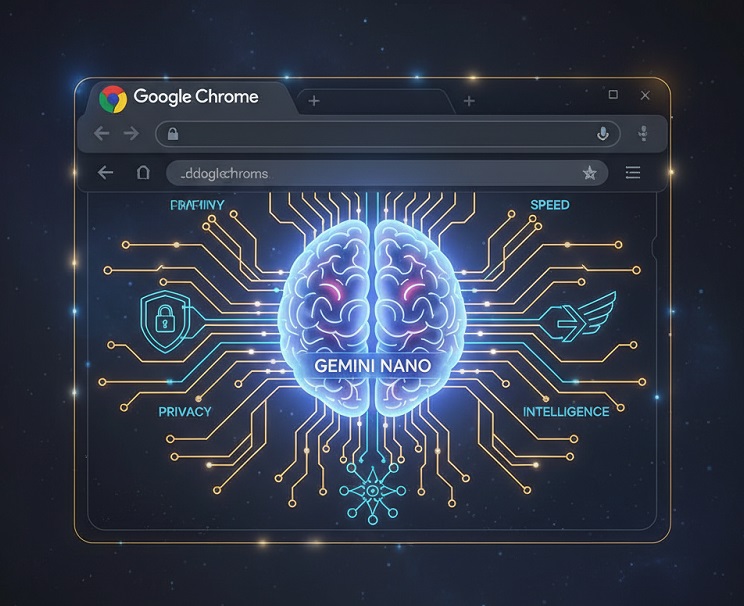
Why On-Device AI Matters
The central benefit of Chrome’s on-device AI is its ability to perform inference locally rather than sending data back and forth to servers. This approach comes with several crucial advantages:
- Enhanced Privacy: Since data stays on the user’s device, sensitive information never leaves the browser environment, protecting personal details and boosting security.
- Lightning-Fast Performance: By skipping the server round-trip, users experience snappier responses and near-instant results. Chrome’s AI runtime also taps into hardware acceleration (CPU, GPU, NPU) to maximize speed.
- Simplified Developer Workflow: No need to deploy or maintain your own AI infrastructure. Chrome automatically manages downloading, updating, and distributing AI models.
- Reduced Overhead: Many APIs don’t require external API calls, authentication keys, or third-party libraries—streamlining development.
Key Chrome AI APIs and Features
Google has been rolling out several APIs, with stable releases in Chrome 138/139 and additional APIs in experimental stages.
- Summarizer API: Automatically generates concise summaries, TL;DR versions, or key highlights from long-form content.
- Language Detector API: Instantly identifies the language of the given text—perfect for multilingual apps and websites.
- Translator API: Offers real-time translations of dynamic or user-generated content, breaking down language barriers.
- Prompt API: Powered by Gemini Nano, this versatile API enables free-form prompting. It supports text, images, and audio inputs (currently in Early Preview Program).
- Writer & Rewriter APIs: Assist with content generation and rewriting, helping users refine or restructure content seamlessly.
- Proofreader API: Improves grammar, readability, and clarity. Currently behind experimental flags.
Requirements for Developers
Before integrating Chrome’s Built-in AI APIs, developers should consider the following:
- Platform Availability: Currently works on Windows 10/11, macOS 13+, Linux, and Chromebook Plus devices.
- Chrome Version: Requires Chrome 138 or newer.
- Hardware Needs: Some APIs require significant free disk space (about 22 GB) and VRAM (4+ GB) for downloading and running AI models locally.
- Experimental Features: Some APIs require enabling browser flags via
chrome://flags/#enable-ai-features. - Model Download: The AI models are fetched locally upon the first interaction and stored within the browser environment.
Real-World Use Cases
The possibilities with built-in AI in Chrome are vast and span multiple industries:
- Productivity Tools: Extensions that can instantly summarize research papers, documentations, or news articles.
- Multilingual Applications: Real-time language detection and translation inside text editors, email clients, and chat apps.
- Education Platforms: AI-driven tools that rewrite explanations, proofread content, or generate learning summaries.
- Developer Utilities: Browser-side code explanation, bug analysis, or documentation helpers.
- Accessibility Features: AI summarization and translation for screen readers and assistive applications.
How to Get Involved
Google is actively expanding the program and looking for developer feedback. Here’s how you can engage:
- Join the Early Preview Program (EPP): Gain access to experimental APIs before public release.
- Participate in Origin Trials: Test APIs in real-world environments and provide feedback.
- Built-in AI Challenge 2025: A developer competition showcasing innovative applications built with Chrome AI APIs.
Final Thoughts
Google Chrome’s move to integrate on-device AI APIs is a major technological leap. By combining privacy, speed, and developer-friendly tools, Chrome is setting the stage for the next era of web innovation. As these APIs mature, developers will be able to create smarter, faster, and more user-centric web experiences—all powered locally, without constant reliance on cloud-based infrastructure.



Leave a Reply